
Dr. Jason Cleaversmith appointed Executive Director, Incubation and Infrastructure

The PEI BioAlliance is pleased to announce the appointment of Dr. Jason Cleaversmith as Executive Director, Incubation and Infrastructure, effective June 21, 2021.
In this role, Jason will be responsible for the Emergence Bioscience Business Incubator as well as hold strategic responsibility for the various BioAlliance facilities and equipment initiatives currently underway and planned.
“Jason is no stranger to the PEI Bioscience Cluster community and has an extensive network both nationally and internationally,” said Rory Francis, CEO, PEI BioAlliance. “We look forward to have someone with his vast experience join the team.”
Most recently he was VP Health and Nutrition for the Center for Aquaculture Technologies and General Manager of Canadian Operations. He has also served as Managing Director of AKVA Group Scotland, Director of Operations and Business Development at the Scottish Aquaculture Innovation Center, and Head of Novartis Aqua Health in PEI overseeing manufacturing and R&D. He was also an industry expert with HATCH Blue, an innovative aquaculture accelerator supporting a cohort of 13 technology companies on three different continents.
Previously, Jason led the bioscience portfolio on behalf of the Government of Prince Edward Island as Senior Investment Manager. He currently sits on the Board of the University of Prince Edward Island’s technology transfer office (Synapse) and on the Innovate UK Animal Sector Advisory Board.
Jason is a graduate of Edinburgh University in Scotland, majoring in natural sciences followed by a PhD in Marine Geochemistry. He also completed an Executive MBA with the University of Glasgow, where he gained a Distinction.
The Chemistry of Innovation: Regis Duffy and the Story of DCL
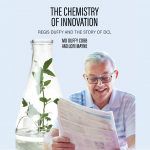
On May 10, Island Studies Press announced the launch of a new book by Mo Duffy Cobb and Lori Mayne, The Chemistry of Innovation: Regis Duffy and the Story of DCL.
Regis Duffy was the first Board Chair of the PEI BioAlliance and was a critical leader in developing the bioscience sector and research capacity in PEI. The BioAlliance benefited early on by reflecting Duffy’s values of working beyond self-interest, focusing on the larger benefit, and investing in long-term success. Duffy was also key in establishing the self-reliance and sustainable prosperity of the sector that would ensure future generations of Islanders could find meaningful employment locally and newly developed PEI products would be sold around the world.
Read full release from Island Studies Press:
How did a farm boy from Prince Edward Island become a successful businessman, mentor, and community philanthropist? A new book by Mo Duffy Cobb and Lori Mayne tells the behind-the-scenes story of how Regis Duffy became a household name. The Chemistry of Innovation: Regis Duffy and the Story of DCL depicts the growing pains and leaps of faith of a community-minded business.
In 1970, Regis Duffy — then dean of science at UPEI — started a small chemical reagent company in a makeshift basement lab at Saint Dunstan’s University to create summer jobs for his students. Diagnostic Chemicals and its offspring, BioVectra, soon grew into global competitors in the diagnostic and pharmaceutical industry, employed hundreds of Islanders, and provided a model for entrepreneurship and economic development in Canada’s smallest province. The key to his success? As Regis once said, “Innovate or die; the alternative is not that appealing.”
The Chemistry of Innovation celebrates the vision, hard work, and people-centred approach that allowed DCL to grow from a start-up “stirring chemicals after church” into a state-of-the-art manufacturing facility. Ever the farmer, Regis planted the seed for a thriving biotech industry on Prince Edward Island.
Published by Island Studies Press at UPEI, The Chemistry of Innovation: Regis Duffy and the Story of DCL is now available for sale at The Bookmark, the UPEI Bookstore, Indigo, Coles, and online through the distributor, Nimbus Publishing. This book was the recipient of a SSHRC Exchange Publication Award from the Vice-President Academic and Research Office at the University of Prince Edward Island. The book also received support from the PEI BioAlliance, Sekisui, and the Office of the President at UPEI.
Canada’s Ocean Supercluster announces $6M Sustainable Protein for Aquaculture Project
Republished from Canada’s Ocean Supercluster. Read full story on the OSC website.
On Monday, May 3, 2021 Canada’s Ocean Supercluster announced four new projects with a total value of almost $11 million, including the Sustainable Protein for Aquaculture project. This Nova Scotia-led project will bring together academia, government, and the private sector to develop and commercialize two breakthrough technologies to produce an environmentally sustainable and low-cost protein for the aquaculture industry while reducing oil and gas emissions.
This game-changing project represents significant developments in science and technology and has never been done before. The Sustainable Protein for Aquaculture project will take greenhouse gas emissions from upstream oil and gas and convert them into a high-value protein product to be used to feed farmed fish.
The Sustainable Protein for Aquaculture Project is led by DeNova, in collaboration with the Center for Aquaculture Technologies Canada, Natural Products Canada, Dalhousie University, the National Research Council of Canada, Atlantic Canada Opportunities Agency (ACOA), and Cooke Aquaculture.
With a total project value of $6 million, the Ocean Supercluster will provide almost $2.6 million with the balance of funding coming from project partners.
The Sustainable Protein for Aquaculture Project will put Atlantic Canada at the forefront of the alternative and sustainable protein sector while reducing harmful greenhouse gas emissions, contributing to sustainable growth of Canada’s ocean economy. This project will create 12 new full-time positions with the potential for more than 150 direct jobs upon commercial success.
Hair loss biotech company Triple Hair demonstrates potential growth

When renowned ophthalmologist Dr. Houfar Sekhavat was faced with his own hair loss, he tried several known treatments with disappointing results. He started researching solutions in an effort to find an effective option, which led him to Peter Ford, a pharmacist and owner of Ford’s Pharmacy in Moncton, New Brunswick. Using their collective expertise, this creative pair experimented with different formulations and together found a combination that worked, leading to the creation of Triple Hair.
New Brunswick-based Triple Hair is a clinical-stage Canadian biotechnology company specializing in the development of innovative treatments for alopecia. As much as 20% of people suffer from hair loss, clinically referred to as alopecia and despite the prevalence of the issue, the available solutions are limited. Triple Hair aims to change the market landscape, offering a product to patients that shows results.
After many years of research and trials, Triple Hair has succeeded in creating an effective product to stimulate hair growth, namely its TH07 prescription drug. . Triple Hair is the first company that will launch a triple combination therapy in Canada, and they are currently working through the regulatory steps to get their product to market including an FDA Phase 3 clinical trial.
Triple Hair is the latest company to join Emergence, Atlantic Canada’s bioscience business incubator dedicated to assisting start-ups and growth-stage companies in efficiently bringing their products and services to market.
“We are happy to join the Emergence Incubator which has proven itself with other young biotech companies like ours. We believe that Triple Hair will highly benefit from the resources the program offers,” said Jean-Philippe Gravel, President and CEO of Triple Hair. “The Emergence Incubator will help accelerate the development and commercialization of our innovative Therapy-07 prescription drug. No new and effective hair growth drugs have been developed in the last 20 years. We intend to change that and set a new standard in terms of hair growth results.”
As a client of Emergence, Triple Hair will have access to business incubation services including mentorship and advisory services, team mentorship program as well as access to networks and resources.
For more information on Emergence, visit emergencebioincubator.com.
Penny Walsh-McGuire appointed Executive Director, CASTL

The PEI BioAlliance is pleased to announce the appointment of Penny Walsh-McGuire as Executive Director of the Canadian Alliance for Skills and Training in Life Sciences (CASTL), effective June 7, 2021. As Executive Director, Penny will be responsible for leading and developing CASTL as an essential and unique part of our local and national bioscience sector ecosystem.
CASTL is a first-of-its-kind partnership between academia, industry, and government to address the future skills needs of Canada’s fast-growing bioscience sector. CASTL offers multiple applied learning streams and pathways for individuals to acquire the academic knowledge, and technical and professional skills to have a successful career in life sciences.
“I have always been very impressed with Penny’s leadership, intuition, and relationship-building skills,” said Rory Francis, CEO, PEI BioAlliance. “We are thrilled that Penny will now lead the development of CASTL as an essential and unique part of our local and national bioscience sector ecosystem.”
Over the past fifteen years, Penny has held leadership roles, including CEO, Executive Director, and Chief Marketing Officer for several not-for-profit organizations. As CEO of the Greater Charlottetown Area Chamber of Commerce, she has led the organization’s operations and strategic initiatives on behalf of the Chamber’s more than 1,000 members. Through this work, she convened a group of 20 business organizations and industry associations in developing a private-sector-led economic development action plan through the PEI Partnership for Growth.
Penny is passionate about workforce development and has consistently advocated for programs and services to support the growth of PEI’s talent pipeline.
As a highly motivated business leader and communications professional, Penny led marketing and communications for the Confederation Centre of the Arts and the University of Prince Edward Island. As CEO of the Prince Edward Island 2014 celebrations, Penny led a multi-disciplinary team in the strategic development and implementation of a year-long program engaging private-sector, community organizations, and governments at all levels. Penny has most recently served as chair of the Holland College Board of Governors.
A graduate of the University of Prince Edward Island, she holds a master’s and bachelor’s degree in business and a diploma in Events and Conventions Management from Holland College.
For more information on CASTL, visit castlcanada.ca.
Ocean Startup Challenge returns with up to $1.4 million for ocean innovators
Applications open until June 1, 2021.
The Ocean Startup Project has launched its second Ocean Startup Challenge. Up from last year’s $350,000 in prize money, the 2021 edition of the competition will award up to $1.4 million to ocean innovators and entrepreneurs from rural, Indigenous and urban communities, across Canada and internationally. The PEI BioAlliance is one of six partners in the Ocean Startup Project.
The Challenge has three streams:
1) Idea – multiple early-stage teams will each receive up to $25K;
2) Growth – multiple early-stage companies, having made traction and achieved notable milestones, will each receive up to $100K; and
3) Oceanshot – up to one early-stage company tackling ambitious, uncharted problems that will lead to massive market opportunities will receive up to $200K prize.
Additionally, up to three special awards will be issued specifically for: Women Entrepreneurs; Indigenous Founders; and Impact (a startup dedicated to technology for ocean sustainability). Winners receive business support from Challenge sponsors, learning opportunities, access to industry expert mentors, and more.
Read more on the Ocean Startup Challenge website to learn more about eligibility and apply.
Ocean Solutions Exchange webinar on April 27 to focus on marine bioresources

Hosted by the Ocean Startup Project, the Ocean Solutions Exchange is a virtual speaker series that brings together ocean industry experts who will discuss the challenges faced by various ocean sectors, highlight opportunities in the market, and share other insights into their respective fields. The PEI BioAlliance is one of six partners in the Ocean Startup Project.
The Ocean Solutions Exchange on Tuesday, April 27 at 1 p.m. is a free event that has a focus on Marine Bioresources. PEI BioAlliance CEO Rory Francis will be moderating an experienced lineup of panelists:
- Kira Salonius, CEO at Previwo (Norway)
- Randy Peach, Aquaculture Technical Services Account Manager, Zoetis (Canada)
- Beth Mason, CEO at Verschuren Centre for Sustainability in Energy & Environment (Canada)
- Russell Kerr, Research Fellow at Nautilus Biosciences CRODA (UK)
After the panel discussion, you’ll have a chance to connect with speakers and other attendees during sector networking.
Event Overview:
1:00 pm – Panel discussion
Our guest speakers will discuss big problems, trends and new technologies in Marine Bioresources.
2:00 pm – Interactive networking session
The interactive networking session will allow you to:
- Speak with panelists in individual rooms
- Choose when you want to change rooms and speak with another panelist
2:30 pm – Event concludes
BioAlliance welcomes federal budget commitment to bioscience sector

Budget 2021 demonstrates the strategic importance of Canada’s bioscience sector in economic recovery
Charlottetown, PE – The Prince Edward Island BioAlliance welcomes the Government of Canada’s investment in biotechnology innovation as a key priority area set to drive economic recovery for Canada following the COVID-19 pandemic. Budget 2021 includes recommendations that will improve access to investment capital, as well as commitments to refinance key funding programs and build bio-manufacturing capacity. These investments will enable the BioAlliance, along with academic and industry partners, to execute on key priorities over the next few years to grow the PEI Cluster.
Budget 2021 also demonstrates the importance of investing in skills and training for future economic growth. Last year the PEI BioAlliance launched the Canadian Alliance for Skills and Training in Life Sciences (CASTL) with support from the Government of Canada and the Government of PEI, as a regional and national initiative to help address the future skills demand of the bioscience sector, particularly in biopharmaceutical and biologics manufacturing.
“This budget demonstrates the federal government’s awareness of the importance of the bioscience and biotechnology sector in addressing some of the biggest challenges of our time,” said Oliver Technow, Chair, PEI BioAlliance Board of Directors, and CEO, BioVectra. “From the current pandemic and other human health needs, to climate change and global food security, these investments in Canada’s biotech sector will allow Canadian companies to bring solutions to the global marketplace.”
Budget 2021 proposes targeted support for the life sciences and bio-manufacturing sector including:
- $1 billion on a cash basis over seven years, starting in 2021-22, of support through the Strategic Innovation Fund would be targeted toward promising domestic life sciences and bio-manufacturing firms.
- $50 million on a cash basis over five years, starting in 2021-22, to create a life sciences stream in the Venture Capital Catalyst Initiative, as part of a larger venture capital investment.
- $500 million over five years, starting in 2021-22, and $100 million per year ongoing, to expand the Industrial Research Assistance Program to support up to 2,500 additional innovative small and medium-sized firms.
- $500 million over four years, starting in 2021-22, for the Canada Foundation for Innovation to support the bioscience capital and infrastructure needs of post-secondary institutions and research hospitals.
- $250 million over four years, starting in 2021-22, for the federal research granting councils to create a new tri-council biomedical research fund.
- $67.2 million over seven years, starting in 2021-22, to Environment and Climate Change Canada. This standard creates new economic opportunities for Canada’s biofuel producers, including farmers and foresters, who are part of the diverse supply chain for low-carbon fuels.
Over the past decade, the PEI Cluster has established itself as a centre of excellence in bioprocessing and is seeing an abundance of opportunity to expand its role in this critical area.
“The BioAlliance has previously identified a shortage of wet labs and manufacturing facilities, as well as the lack of systematic approach to bio sector skills and training as key factors limiting the potential growth of the sector, both in the province and across Canada,” said Rory Francis, CEO, PEI BioAlliance. “This budget has certainly put the resources in place to address these issues and ensure the bio sector is a major contributor to recovery and growth.”
Swiftsure Innovation’s novel solution aims to provide improved care for ventilator patients

CEO and Founder of Swiftsure Innovation Deanne McCarthy has experienced first-hand the amount of care required for mechanically ventilated patients. For her company, Newfoundland-based Swiftsure Innovation, above all, their mission is to support patients by developing products that will help prevent hospital-acquired infections.
To do this, Swiftsure created a novel device that aims to revolutionize oral care for ventilated patients. Their new solution focuses on improving patient outcomes, protecting frontline workers and benefiting hospitals.
Swiftsure is the latest company to join Emergence, Atlantic Canada’s bioscience business incubator dedicated to assisting start-ups and growth-stage companies in efficiently bringing their products and services to market.
“With the assistance of Emergence, we are doing market research to establish current perceptions of oral care to receive direct input from end users about our device. Establishing feedback from ICU physicians, Registered Nurses, and Respiratory Therapists is an essential part of driving a design that will best serve patients and improve patient outcomes,” said Deanne McCarthy, CEO and Founder, Swiftsure Innovation. “Being supported by Emergence has helped Swiftsure progress in a very meaningful way. It is great to have such awesome support here in Atlantic Canada!”
The challenge with ventilators
While mechanical ventilation provides life-saving treatment for critically ill patients, the problem is that the endotracheal tube that connects the ventilator to the patient’s lungs provides a direct route for germs to enter the lungs. This can result in ventilator-acquired pneumonia, the most fatal and costly of hospital-acquired infections. The problem associated with ventilators has also intensified as a result of the COVID-19 pandemic.
Swiftsure is developing a device that will facilitate the moisturization and cleansing of the mouth and nose of patients on ventilators by flushing them with fluid. Their product will also improve the seal for further germ prevention. They are currently in the design development phase, working with partners at the National Research Council and Dalhousie University. In 2020, they were the winner of the 10th annual BioInnovation Challenge pitch competition at BioPort 2020.
As a client of Emergence, Swiftsure will have access to business incubation services including mentorship and advisory services, team mentorship program as well as access to networks and resources.
For more information on Emergence, visit emergencebioincubator.com.
Gill health project led by AVC faculty member receives $4.7 million in funding
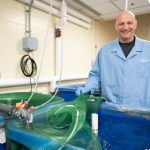
Republished from UPEI News:
A project to develop an early warning system for identifying complex gill disease on salmon farms, led by Dr. Mark Fast, professor of fish health and immunology, Atlantic Veterinary College at UPEI, has received $4.7 million in funding through Genome Canada’s Genomic Applications Partnership Program (GAPP).
The project is one of five applied research genome projects that received $8.6 million in federal funding and an additional $17.8 million in co-funding from provincial governments, businesses, and research partners across Canada. Partnering with Fast on the project are Cermaq Canada, Grieg Seafoods, Genome Atlantic, and Genome BC.
Salmon production in Canada is under increasing threats from infectious and non-infectious diseases such as complex gill disease. Over the last decade, gill health and associated disease have been a growing challenge in salmon farming operations in both the Pacific and North Atlantic. Complex gill disease is a multifactorial condition resulting from the interaction of environmental and husbandry conditions as well as infection by pathogens and parasites to create proliferative lesions, particularly during the summer and fall months.
The project will validate biomarkers of healthy and compromised gills of Atlantic salmon and use these to develop an early warning system for the development of gill disease on Atlantic salmon production sites across Canada. The resulting genomics-enabled tools for fish health will guide the management and intervention strategies for complex gill disease in Atlantic salmon.